

Description
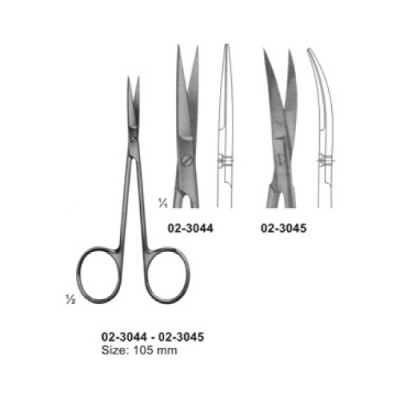
Delicate Scissors AE 02 3044 02 3045
Delicate Scissors AE 02 3044 02 3045
Delicate Scissors (AE 02-3044 / AE 02-3045)
Delicate Scissors AE 02 3044 02 3045
Delicate Scissors AE 02 3044 02 3045
Delicate Scissors AE 02 3044 02 3045
Delicate Scissors AE 02 3044 02 3045
These instruments are designed for fine surgical tasks—cutting delicate tissues, precise suture removal, or micro-dissection where control, accuracy, and minimal trauma to surrounding tissue are paramount.
Design & Construction
-
Manufactured from high-quality surgical-grade stainless steel (often 410- or 420-series, or a martensitic surgical alloy) providing durability, corrosion resistance, and ease of sterilisation.
-
The designation “delicate” implies a finer blade profile: narrower blades, shorter length, and a soft, smooth action hinge, allowing minimal resistance and high tactile feedback.
-
The two part numbers (AE 02-3044 vs AE 02-3045) likely reflect slight variations (for example: straight blades vs curved blades; or blunt tip vs sharp tip) so a surgeon can select the appropriate geometry for the task.
-
The handles are typically ring-type (finger loops) for standard scissor control, with careful ergonomics to reduce hand fatigue during extended procedures.
-
The blade tips are finely honed and precisely aligned, often with mirrored finish or satin finish to minimise glare and reflections in the surgical field.
Intended Use & Advantages
-
Ideal for microsurgical or delicate work: e.g., ophthalmic, plastic/reconstructive, ENT, dental soft-tissue, or in any setting where small, precise cuts are needed.
-
The fine blades allow the surgeon to “track” along small anatomical structures (thin membranes, fine sutures, small vessels) with minimal disruption.
-
Because the hinge is engineered for smooth travel, the surgeon has greater tactile feedback—this means less risk of “snapping” or uncontrolled movement, which is critical when working near delicate tissue.
-
The sharp (or possibly blunt) tip options allow matching to the clinical task: a sharp point for very fine dissection, or a blunt tip to avoid accidental puncture of adjacent structures.
Maintenance & Sterilisation
-
After each use, rinse and clean promptly to avoid dried biological material, which may impair blade alignment or hinge performance.
-
The stainless steel construction supports steam autoclaving and other standard sterilisation modalities (subject to manufacturer instructions).
-
Regular maintenance: check blade alignment, inspect for burrs or nicks, adjust hinge tension (if applicable) to prevent over-tight or loose action.
-
Storage: keep closed or in a designated scissor tray to prevent accidental damage of fine tips or blades.
Why this instrument stands out
The designation “delicate” is meaningful—it signals a premium instrument designed for the surgeon needing ultimate precision rather than a generic heavy-duty scissor. For operations where millimetres matter, these scissors give a surgeon the confidence to make clean cuts with minimal trauma, improving patient outcomes (less bleeding, less scar tissue, faster healing). When matched with the right blade geometry (as indicated by the two model variants), this instrument becomes highly versatile.
Extracting Forceps
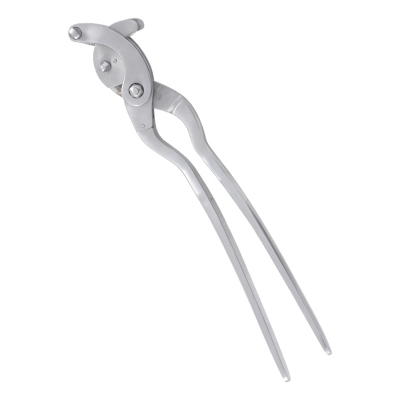
Extracting forceps are the work-horses of surgical removal/traction tasks—grasping, holding, extracting tissue, fragments, foreign bodies, etc. A well-designed extracting forceps complements the delicate scissors above, rounding out a precision instrument set.
Design & Construction
-
Built of surgical-grade stainless steel with a polished finish (or matt finish to reduce glare) for durability and ease of cleaning.
-
Typically have a beak or serrated jaw design to provide secure grip on tissue or bone fragments. The lead-in of the jaw may be tapered or slender for access in confined spaces.
-
The hinge or pivot mechanism is robust, allowing good mechanical advantage: a forceps that opens and closes smoothly, with minimal “play” or wobble, ensuring reliable grasping without slipping.
-
The handles may be ringed or spring-type (for repeated quick opening) depending on style; some extracting forceps also include locking features if holding under traction is required.
Intended Use & Advantages
-
Primary use: extraction of tissue, bone fragments, roots (in dental surgery), foreign bodies, or retracting tissues. In dental/ENT settings, extracting forceps are critical for removing impacted roots or small pieces quickly and cleanly. vendorportal.ecms.va.gov+1
-
Because the jaws are engineered for gripping, the risk of slippage is reduced; this minimizes the need for repeated attempts and reduces trauma to surrounding tissue.
-
Many extracting forceps are configured for ergonomic use in tight anatomical spaces—thin shafts, angulated heads, or specialised jaw shapes to reach behind molars, around bone ridges, or into sinus cavities.
-
The combination of strength and precision: the surgeon can apply appropriate extraction force while maintaining control, reducing the risk of breakage of tooth roots or inadvertent damage to adjacent structures.
Maintenance & Sterilisation
-
After use, ensure any biological residue is removed from the jaw serrations and hinge region, as retained debris can interfere with accurate closure and may corrode under sterilisation.
-
Compatible with standard sterilisation cycles (steam, chemical) but should follow manufacturer recommendations—especially for instruments with locking/spring mechanisms.
-
Regular inspection of jaw alignment, serration integrity (no worn or dulled serrations) and hinge play is essential for longevity and reliable performance.
-
Storage in instrument trays designed to keep jaws slightly open (if spring-type) or locked open to relieve tension on springs over long periods.
Why this instrument is indispensable
In the surgical armamentarium, extracting forceps are a key tool when removal is required. A well-matched forceps (in terms of size, jaw shape, handle ergonomics) allows a surgeon to transition from delicate dissection (with the delicate scissors) to controlled extraction without sacrificing precision. The result is less operative time, less tissue trauma, and a smoother procedure.
Combined Use Case
When used together, the Delicate Scissors (AE 02-3044/45) and Extracting Forceps form a complementary pair for fine surgery:
-
The surgeon uses the delicate scissors to cut and dissect fine tissue, release attachments, isolate the fragment or structure to be removed.
-
Once the target is freed, the extracting forceps are introduced to grasp and remove it under control.
-
Because both instruments are optimised for precision (rather than heavy-duty rough handling), the entire process is smoother, less traumatic, and facilitates faster healing and better outcomes.
Suggested Specification Template (for quoting/manufacturing)
-
Model Numbers: AE 02-3044 (straight blade) / AE 02-3045 (curved blade) [adjust as per supplier]
-
Length: e.g., 115 mm (for delicate scissors) – typical in micro-surgical sets. smsindus.com+1
-
Blade Tip: Sharp (pointed) or Blunt (round) depending on variant.
-
Blade Style: Straight or Curved (for AE 02-3045)
-
Material: Surgical stainless steel, corrosion-resistant, heat-treat hardened blades.
-
Finish: Mirror-polished or satin-finish, depending on glare preference.
-
Forceps: Matching size (e.g., 150 mm), slender shaft, fine serrated jaws, ergonomic handles, optional locking mechanism.
-
Packaging: Individually wrapped and sterilised OR supplied non-sterile with autorisable sterilisation instructions.
-
Certification: CE-marked / ISO 13485 compliant manufacturing, with batch traceability and sterilisation validation.
If you like, I can check for the exact manufacturer
Delicate Scissors AE 02 3044 02 3045
Follow Us On Social Media Account


Reviews
There are no reviews yet.