


Description
Delicate Scissors AE 02 3048 02 3049
Delicate Scissors AE 02 3048 02 3049
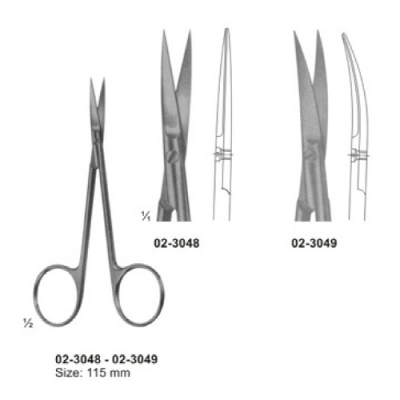
Delicate Scissors (Model AE 02-3048 / AE 02-3049)
Delicate Scissors AE 02‑3048/3049
Overview:
These Delicate Scissors, designated models AE 02-3048 and AE 02-3049, are precision instruments designed for fine surgical tasks requiring exacting control, minimal tissue trauma, and high reliability. These instruments are typically used in microsurgical, ENT, ophthalmic, dental-soft-tissue or delicate reconstructive procedures, where the surgeon must execute fine cuts in confined anatomical spaces.
Delicate Scissors AE 02 3048 02 3049
Delicate Scissors AE 02 3048 02 3049
Delicate Scissors AE 02 3048 02 3049
Design & Specifications:
-
Blade geometry and variants: The two model numbers (3048 vs 3049) likely correspond to slight variations in blade design—such as straight vs curved blades, or different tip shapes (sharp vs blunt) so that the practitioner can select the geometry best suited for the clinical task.
-
Length & profile: While specific length data for these exact part numbers are not publicly sourced, delicate scissors in this class often come in lengths between ~110mm-130mm (depending on manufacturer) and feature fine, narrow blades for minimal tissue disruption. For example, similar “iris-delicate” scissors are described as “ideal for detailed dissection of fine tissue and fine suture removal.” smsindus.com+1
-
Material & finish: Constructed from surgical-grade stainless steel, offering corrosion resistance, durability and compatibility with standard sterilisation processes. The finish is often satin- or mirror-polished to minimise glare and allow easy cleaning.
-
Hinge/joint: The scissors are engineered for a smooth, precise hinge action with minimal “play” (blade wobble) and proper alignment of tips—important to ensure clean, accurate cuts without drift or full-blade misalignment.
-
Handles: Typically finger-ring handles (loop type) for standard scissor operation; ergonomics are tuned for fine control rather than heavy cutting force.
-
Intended for repeated sterilisation: The instrument is suitable for standard hospital sterilisation protocols (steam autoclave, possibly chemical sterilisation) in accordance with manufacturer’s instructions.
Intended Use & Clinical Advantages:
-
These scissors are ideal when the surgeon needs to make controlled, accurate cuts on delicate tissues — thin membranes, fine sutures, small vessels, mucous membranes, or areas with limited access. For example: “narrow and thin blades for shearing soft tissue, such as blood vessels, nerves, fat, liver, kidney, mucous membrane, etc.” RWD Life Science
-
The availability of a variant (3049) gives flexibility: the appropriate blade curvature or tip design helps when working around anatomies (curved approach) or where direct straight line cuts suffice.
-
The precision design reduces collateral tissue trauma, meaning less bleeding, less post-operative inflammation, and potentially faster healing.
-
The tactile feedback and refined hinge allow the surgeon to feel resistance changes and cut more confidently rather than relying on brute force or heavy-duty instruments in a fine environment.
-
Because the instrument is “delicate” in profile, it lowers the margin for accidental damage in sensitive areas — for example in ophthalmic surgery, ENT, or microsurgery.
Maintenance & Handling:
-
After each use, immediately rinse and soak to remove biological debris; dried material may impede blade alignment or hinge movement.
-
Inspect blades for nicks, burs or misalignment; check that blade tips meet precisely and close flush without gaps.
-
Store in a designated instrument tray designed for fine instruments — avoid placement near heavy instruments that might damage the blade tips. Protect the tips from contact with other hard surfaces.
-
Periodically check hinge tension: too loose and the blades won’t cut accurately; too tight and surgeon fatigue increases.
-
Follow sterilisation instructions: repeated steam cycles can impact finish or tolerances if not maintained properly. Some manufacturers recommend lubrication of hinge joints if applicable.
-
Use only for intended application: finer blades are not designed for dividing thick or dense materials — doing so may blunt or damage the instrument.
Why this instrument stands out:
While many general-purpose surgical scissors are available, the Delicate Scissors AE 02-3048/3049 are crafted specifically for tasks requiring enhanced precision, control and access in confined spaces. The ability to select between variants (3048 vs 3049) means the clinician can match instrument geometry to task needs — for example, straight for direct cutting or curved for around anatomical curves. The high-grade materials, refined hinge action, ergonomic design and fine profile all contribute to better outcomes in microsurgery or delicate procedures. For any surgical set where meticulous cutting is required, this instrument should be considered a premium choice.
Delicate Scissors AE 02 3048 02 3049
Follow Us On Social Media Account
Reviews
There are no reviews yet.