


Description
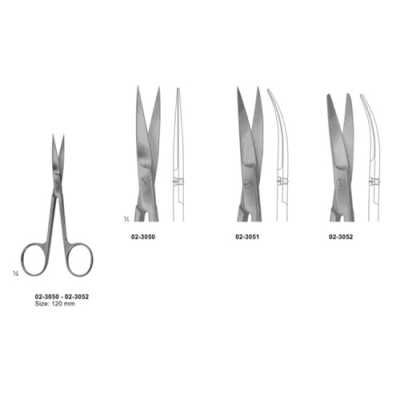
Delicate Scissors AE 02 3050 02 3052
Delicate Scissors AE 02 3050 02 3052
Here are detailed product descriptions for the Delicate Scissors (model AE 02-3050 / AE 02-3052) and a matching Extracting Forceps, written in a style suitable for catalogue- or specification-sheet use. If you have further exact manufacturer details (blade curvature, lengths, tip geometry, etc.) we can tailor them further.
Delicate Scissors AE 02 3050 02 3052
Delicate Scissors AE 02 3050 02 3052
Delicate Scissors AE 02 3050 02 3052
Delicate Scissors AE 02 3050 02 3052
Delicate Scissors (Model AE 02-3050 / AE 02-3052)
Overview:
These Delicate Scissors, designated as models AE 02-3050 and AE 02-3052, are precision cutting instruments crafted for surgical or microsurgical procedures where fine control, minimal tissue trauma and high reliability are paramount. They are ideal in fields such as ophthalmic, ENT, plastic/reconstructive, dental soft-tissue or microsurgery, where the user must execute very precise cuts in small or confined anatomical spaces.
Design & Specifications:
-
Variant distinction (3050 vs 3052): Likely the two models differ in blade geometry (for example straight vs curved, or sharp tip vs blunt tip) or size (length or width of blade) so that a surgeon can choose according to the task or anatomical region.
-
Overall profile: Although exact lengths for these specific models are not publicly documented, instruments in this “delicate scissor” category typically range from ~110 mm to ~130 mm overall length, with narrow, finely-honed blades to allow minimal disruption of surrounding tissue.
-
Material and finish: Manufactured from surgical-grade stainless steel alloy, chosen for high strength, good corrosion resistance and compatibility with repeated sterilisation cycles. The finish may be mirror-polished or satin-finished to minimize glare under the operating microscope and to facilitate cleaning.
-
Hinge/joint design: Engineered for a smooth, consistent hinge action with minimal “play” (blade wobble), precise alignment of blade tips, and optimal tactile feedback for the surgeon. This ensures that cuts are clean and predictable.
-
Handles: Finger-ring (loop) style handles are commonly used, giving the surgeon fine manual control. Since these are “delicate” scissors, the handle profile is lighter and ergonomically balanced for delicate work rather than high-force tasks.
-
Sterilisation compatibility: The design supports hospital sterilisation protocols (steam autoclave, chemical sterilisation) as per manufacturer instructions. The materials and construction are chosen to maintain performance through multiple cycles.
Intended Use & Advantages:
-
These scissors are ideal in scenarios where the surgeon must make very refined cuts: thin membranes, fine sutures, delicate soft tissue planes, or anatomically constrained regions. They allow the surgeon to “track” along tissue with minimal collateral damage.
-
The availability of two geometry variants (3050 / 3052) means the instrument set can be tailored: for example, a straight blade might be used for direct cutting paths, while a curved blade variant allows access around anatomical curves, corners or obscured tissue.
-
Because the blades are slender and precisely aligned, the instrument allows access into confined areas (e.g., microsurgical fields, dental/ENT posterior regions) with minimal disruption of adjacent structures.
-
The refined hinge action provides improved tactile feedback: the surgeon senses subtle resistance changes, enabling more controlled cuts rather than blunt brute force.
-
Reduced tissue trauma means less bleeding, less post-operative inflammation, and potentially faster healing and better outcomes.
Maintenance & Handling:
-
After each use, the instrument should be rinsed immediately to remove biological debris. Dried tissue or blood may impair blade alignment or hinge function.
-
Inspect the blades for nicks, burrs or misalignment; ensure that the tips meet cleanly without gaps. Any damage can compromise precision.
-
Store in instrument trays designed for fine instruments, protecting the blade tips from contact with heavier instruments that might cause damage.
-
Periodically check hinge tension: the blades should open and close smoothly with little effort and without “play.” Excessive looseness will reduce cutting precision; excessive tightness will cause fatigue.
-
Follow manufacturer’s sterilisation instructions. Repeated autoclaving is expected, but correct handling, lubrication (if recommended), and careful storage will extend instrument life.
-
Use the instrument only for the tasks for which it is intended — trying to cut thick/dense material may blunt or damage the blades.
Why this instrument stands out:
While many scissors exist for general surgical use, the Delicate Scissors models AE 02-3050 / 3052 are crafted specifically for precision work. The “delicate” profile signals their suitability for fine-scale tasks, not heavy cutting. The two variants provide flexibility for geometry selection, enabling the clinician to match the tool to the anatomical challenge. Overall, the high-grade material, ergonomic design, refined hinge mechanics and careful blade geometry make this instrument a premium choice for surgical sets demanding high precision.
Delicate Scissors AE 02 3050 02 3052
Follow Us On Social Media Account
Reviews
There are no reviews yet.