


Description
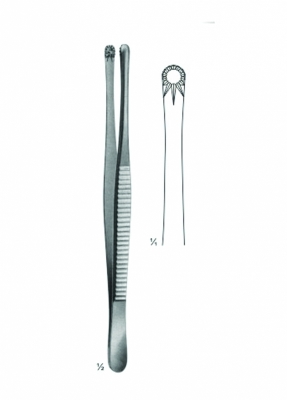
suture Instruments Ligature Needles AE 02 3926
suture Instruments Ligature Needles AE 02 3926
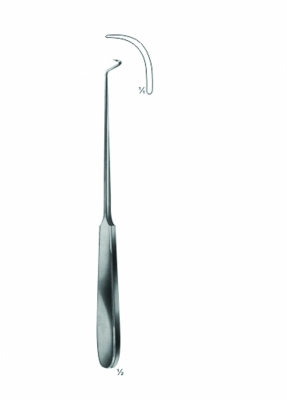
Ligature Needle AE 02-3926
Overview
suture Instruments Ligature Needles AE 02 3926
suture Instruments Ligature Needles AE 02 3926
suture Instruments Ligature Needles AE 02 3926
suture Instruments Ligature Needles AE 02 3926
suture Instruments Ligature Needles AE 02 3926
Ligature Needle AE 02-3926
Overview
The Ligature Needle AE 02-3926 belongs to the surgical suture instrument family used for placing ligatures — tying off vessels, ducts, or securing tissues — especially in areas where access is difficult. It is part of a series that emphasizes precision, reach, and minimal tissue trauma.
Design & Construction
-
Material: Likely surgical-grade stainless steel, chosen for its strength, corrosion resistance, and ability to undergo multiple sterilization (autoclave) cycles without significant degradation.
-
Finish: Polished or satin finish on the shaft to reduce friction when passing through tissue, and to ease loading / guiding of suture materials. Smooth surfaces help prevent snagging or tearing of tissues.
-
Curvature & Shape: Ligature needles like this generally have a curved or semi-curved arc, allowing surgeons to navigate around structures and access deep or confined spaces. The curvature helps the needle tip reach behind organs or under tissue folds. The exact angle of the curve (e.g. ½ circle, ¾ circle, or a special steeper turn) will dictate suitability for different anatomical sites.
-
Length & Gauge: Though the catalog did not specify AE 02-3926’s precise length, similar ligature needles in catalogs are in ranges from about 17-25 cm depending on variant. The gauge (thickness) is chosen to balance between rigidity (so it does not bend under the load of pulling ligatures) and minimal invasiveness (so the needle doesn’t introduce unnecessary trauma).
Tip & Eye / Threading
-
If AE 02-3926 follows standard ligature needle design, it might have a tip that is sharp or semi-sharp to penetrate tissue cleanly. Some ligature needles are blunt tipped depending on the application (e.g. after dissection or where tissue is delicate).
-
The eye or thread-attachment may be traditional fixed eye or sliding eye (if it’s a Reverdin-type or similar). The ability to load suture after the needle is passed can reduce drag and improve control in tight spaces.
Function & Applications
-
Primary Use: To guide suture (ligature) around structures such as vessels, ducts, or tissue bundles especially when they are deep, behind other tissue, or in narrow surgical corridors.
-
Surgical Specialties: General surgery, vascular surgery, gynecology & obstetrics, thoracic surgery, ENT, and reconstructive or plastic surgery. In many cases, ligation is needed for hemostasis (bleeding control), securing flaps, or tying off small‐branch vessels.
-
Advantages in Deep Fields: Good length + appropriate curvature allow the surgeon to reach around anatomical obstacles without excessive retraction or large incisions.
Benefits
-
Reduced Tissue Trauma: A well-designed tip and smooth shaft minimize tearing, drag or trauma.
-
Precision & Control: Because of the needle’s shape and expected design, the surgeon can place ligatures more accurately.
-
Durability: Stainless steel and quality manufacturing make it reusable, which offers cost savings over disposables if maintained properly.
-
Sterilizable & Reusable: Designed for repeated use in sterile surgical environments.
Care & Handling
-
Cleaning: After each use, all biological materials (blood, tissue, suture remnants) must be thoroughly removed. Curved portions of the needle need extra attention because debris tends to accumulate there.
-
Inspection: Before use, check tip sharpness (if sharp), alignment, curvature integrity (no bends or warping), and that any eye or suture-attachment is clean and functional.
-
Sterilization: Autoclave or other accepted sterilization methods. Make sure it’s dry before storage to avoid corrosion.
-
Storage: Should be kept in trays or protected holders so tips and curves aren’t damaged by contact with other instruments.
Extracting Forceps
Since “Extracting Forceps” typically refers to surgical/dental tools used to remove teeth (or remnants), here is a detailed description that can be applied to properly designed forceps.suture Instruments Ligature Needles AE 02 3926
The Ligature Needle AE 02-3926 belongs to the surgical suture instrument family used for placing ligatures — tying off vessels, ducts, or securing tissues — especially in areas where access is difficult. It is part of a series that emphasizes precision, reach, and minimal tissue trauma.
Design & Construction
-
Material: Likely surgical-grade stainless steel, chosen for its strength, corrosion resistance, and ability to undergo multiple sterilization (autoclave) cycles without significant degradation.
-
Finish: Polished or satin finish on the shaft to reduce friction when passing through tissue, and to ease loading / guiding of suture materials. Smooth surfaces help prevent snagging or tearing of tissues.
-
Curvature & Shape: Ligature needles like this generally have a curved or semi-curved arc, allowing surgeons to navigate around structures and access deep or confined spaces. The curvature helps the needle tip reach behind organs or under tissue folds. The exact angle of the curve (e.g. ½ circle, ¾ circle, or a special steeper turn) will dictate suitability for different anatomical sites.
-
Length & Gauge: Though the catalog did not specify AE 02-3926’s precise length, similar ligature needles in catalogs are in ranges from about 17-25 cm depending on variant. The gauge (thickness) is chosen to balance between rigidity (so it does not bend under the load of pulling ligatures) and minimal invasiveness (so the needle doesn’t introduce unnecessary trauma).
Tip & Eye / Threading
-
If AE 02-3926 follows standard ligature needle design, it might have a tip that is sharp or semi-sharp to penetrate tissue cleanly. Some ligature needles are blunt tipped depending on the application (e.g. after dissection or where tissue is delicate).
-
The eye or thread-attachment may be traditional fixed eye or sliding eye (if it’s a Reverdin-type or similar). The ability to load suture after the needle is passed can reduce drag and improve control in tight spaces.
Function & Applications
-
Primary Use: To guide suture (ligature) around structures such as vessels, ducts, or tissue bundles especially when they are deep, behind other tissue, or in narrow surgical corridors.
-
Surgical Specialties: General surgery, vascular surgery, gynecology & obstetrics, thoracic surgery, ENT, and reconstructive or plastic surgery. In many cases, ligation is needed for hemostasis (bleeding control), securing flaps, or tying off small‐branch vessels.
-
Advantages in Deep Fields: Good length + appropriate curvature allow the surgeon to reach around anatomical obstacles without excessive retraction or large incisions.
Benefits
-
Reduced Tissue Trauma: A well-designed tip and smooth shaft minimize tearing, drag or trauma.
-
Precision & Control: Because of the needle’s shape and expected design, the surgeon can place ligatures more accurately.
-
Durability: Stainless steel and quality manufacturing make it reusable, which offers cost savings over disposables if maintained properly.
-
Sterilizable & Reusable: Designed for repeated use in sterile surgical environments.
Care & Handling
-
Cleaning: After each use, all biological materials (blood, tissue, suture remnants) must be thoroughly removed. Curved portions of the needle need extra attention because debris tends to accumulate there.
-
Inspection: Before use, check tip sharpness (if sharp), alignment, curvature integrity (no bends or warping), and that any eye or suture-attachment is clean and functional.
-
Sterilization: Autoclave or other accepted sterilization methods. Make sure it’s dry before storage to avoid corrosion.
-
Storage: Should be kept in trays or protected holders so tips and curves aren’t damaged by contact with other instruments.
Extracting Forceps
Since “Extracting Forceps” typically refers to surgical/dental tools used to remove teeth (or remnants), here is a detailed description that can be applied to properly designed forceps.’
suture Instruments Ligature Needles AE 02 3926
Follow Us On Social Media Account
Reviews
There are no reviews yet.