


Description
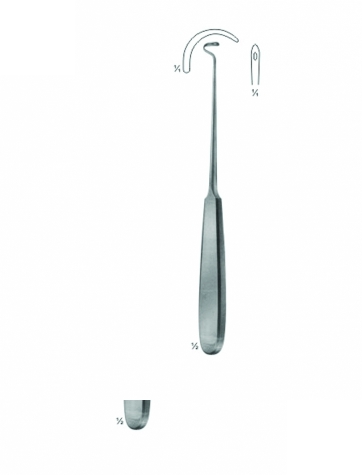
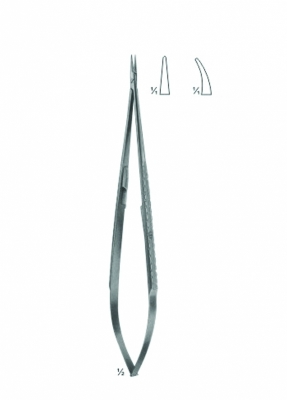
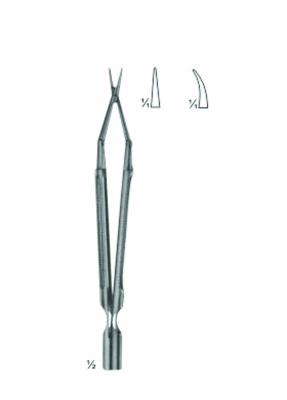
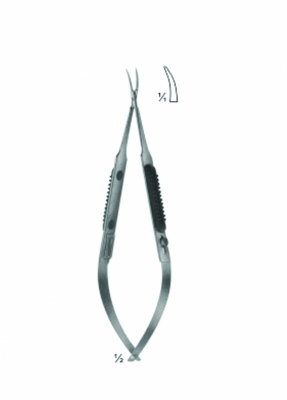
suture Instruments Ligature Needles AE 02 3929
suture Instruments Ligature Needles AE 02 3929
Ligature Needle AE 02-3929
Overview & Purpose
suture Instruments Ligature Needles AE 02 3929
suture Instruments Ligature Needles AE 02 3929
suture Instruments Ligature Needles AE 02 3929
suture Instruments Ligature Needles AE 02 3929
suture Instruments Ligature Needles AE 02 3929
suture Instruments Ligature Needles AE 02 3929
suture Instruments Ligature Needles AE 02 3929
The Ligature Needle AE 02-3929 is a surgical suture instrument used to place ligatures—tightening suture material around vessels, ducts, or tissue bundles—to control bleeding, secure structures, or anchor tissue in surgery. This model is part of a series of ligature needles identified by the “AE 02-392x” numbering, implying similarity in design with its sisters (3921-3928 etc.), and thus manufactured for precise performance in challenging surgical environments.
Ligature needles are critical tools in many surgical disciplines: general surgery, vascular surgery, gynecology, thoracic surgery, ENT, and occasionally in reconstructive procedures. AE 02-3929 is intended especially for cases requiring reach into deeper anatomical spaces, around vital structures, or in confined fields where blunt or straight needles are impractical.
Design, Materials & Physical Features
-
Material: Surgical-grade stainless steel. The metal is chosen for its toughness, resistance to corrosion, capacity to withstand high-temperature sterilization cycles (autoclave), and its ability to retain shape and tip integrity over repeated use.
-
Finish: Polished, smooth shaft to minimize friction as the needle passes through tissue and as the ligature material is pulled through. The surface finish reduces “drag” on tissues and suture, helping reduce trauma. Any junctions (tip, eye) are smoothly welded or integrally formed so there are no rough edges.
-
Curvature & Shank Design: While exact curvature for AE 02-3929 is not publicly documented, ligature needles in this class often feature a curved arc design (half-circle, or specific curved shape) that helps navigate around organs, behind vessels, or through tissue planes. The curve ensures that the needle can approach from an angle without the surgeon having to contort or retract tissue excessively.
-
Length & Gauge: In the absence of exact data, one may assume that AE 02-3929 is in a length similar to its series counterparts—likely in the mid to long range (150-230 mm) or appropriate to its curvature. Gauge (thickness) is balanced: sufficiently robust to resist bending under tension during ligation, yet fine enough to minimize tissue displacement and trauma.
-
Tip & Eye: Tip is expected to be sharp or semi-sharp for ease of penetration; the eye (where the suture is threaded) may be fixed or possibly designed to allow later threading (depending if it’s a fixed-eye, swaged-eye, or a sliding-/Reverdin-type). The eye geometry should accommodate common suture materials (size, thickness), and be smooth to avoid suture fraying.
Functional Advantages
-
Deep & Restricted Access: The combination of curvature, length, and ergonomic handling allow AE 02-3929 to reach ligation sites in deep cavities or restricted corridors (e.g. retroperitoneal space, deep mediastinum, pelvic region) without requiring extensive exposure.
-
Accuracy & Control: Smooth finish, well-formed tip, precise eye allow controlled placement of ligatures with minimal unintended trauma. Good balance aids handling, minimizing surgeon fatigue.
-
Hemostasis & Safety: Effective in securing bleeding points; ensures tight ligatures without risk of suture slippage. Proper ligation is essential to reduce blood loss, avoid postoperative hematomas, or leaks (in vascular or ductal ligation).
-
Reusability & Sterilizable: Because the instrument is made of high-grade stainless steel with good finish, it can be sterilized repeatedly, maintaining its performance over time—thus cost-effective compared to disposable alternatives.
Care, Handling & Usage Tips
-
Cleaning: Immediately after use, remove all biological debris, especially in tip, eye, and curves. Use appropriate brushes and enzymatic agents. Curved surfaces tend to trap material; ensure full clean-out.
-
Inspection Pre-Use: Check that the tip is sharp (no burrs), that the curvature is correct (no warping), that the eye is smooth and not deformed, that the surface finish is intact. Even minor defects can increase tissue damage or make suture loading difficult.
-
Sterilization: Follow hospital/clinic autoclave protocols or equivalent. Ensure instrument is dry post-sterilization to prevent rust or pitting, particularly around any welds or joints.
-
Proper Matching: Choose this needle when its curvature, length, and tip style fit the anatomical site. Too large a curve in small space reduces control; too short a needle may limit reach. Also choose appropriate suture material size for the eye capacity.
-
Storage: Keep in instrument trays or case inserts that protect the tip and preserve curvature. Avoid knocking against other metal instruments.
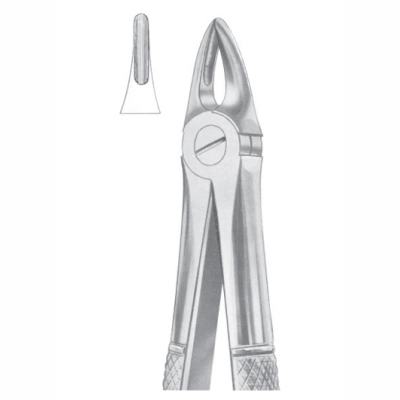
Extracting Forceps
Below is an in-depth description of Extracting Forceps, widely used in dental/oral surgical settings, which complements the ligature needle description for a product catalog.
suture Instruments Ligature Needles AE 02 3929
Follow Us On Social Media Account

Reviews
There are no reviews yet.