


Description
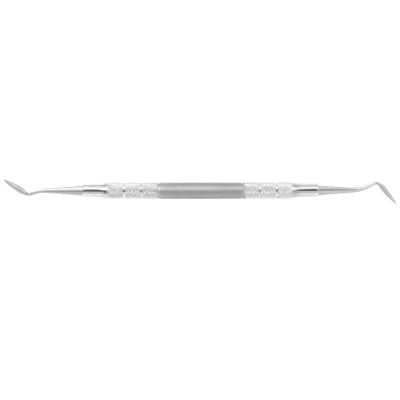
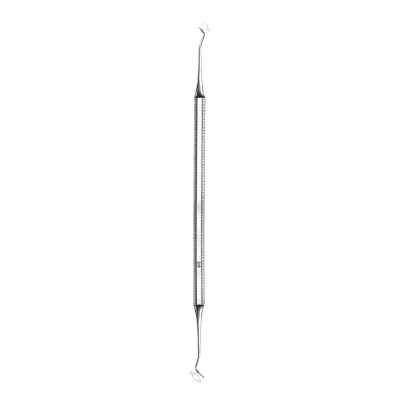
suture Instruments Ligature Needles AE 02 3921
suture Instruments Ligature Needles AE 02 3921
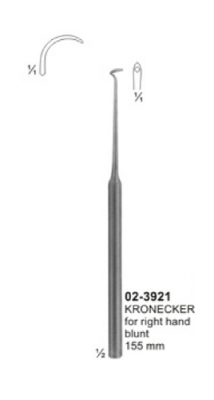
Ligature Needle – AE 02-3921
Overview & Purpose
suture Instruments Ligature Needles AE 02 3921
suture Instruments Ligature Needles AE 02 3921
suture Instruments Ligature Needles AE 02 3921
suture Instruments Ligature Needles AE 02 3921
suture Instruments Ligature Needles AE 02 3921
suture Instruments Ligature Needles AE 02 3921
The Ligature Needle AE 02-3921 is part of the surgical suture instruments (“ligature needles / Reverdin / ligature”) used to place ligatures—ties or loops of suture material—around blood vessels, ducts, or tissues, or otherwise secure tissue in surgery. In particular, this code is listed under “suture Instruments – Ligature Needles # AI-02-3921” by Allex International. Allex International
Ligature needles combine the properties of suturing needles together with specialized shapes to facilitate passage of suture material in constricted or difficult‐to‐access areas, especially when securing vessels or tissue structures deep in surgical sites.
Design & Dimensions
-
Type / Mechanism: Often these ligature needles are of the Reverdin / sliding-eye type, which means there is a mechanism near the handle that allows the needle’s eye to open and close (or slide), so you can pass the needle through tissue first, then load the suture thread through the needle after insertion. This reduces trauma to tissues, especially in tight or deep regions.
-
Length: For AE 02-3921, the catalog entry from Allex International groups it among similarly sized ligature / Reverdin needles. One listing suggests a “Reverdin 195 mm” and other similar listings show “Reverdin 140 mm” depending on the code. The “Reverdin Needles” 3913–3916 are 195 mm. However the “Suture Instruments – Ligature Needles AE 02-3921” entry doesn’t explicitly list the length in that particular line, but since it’s in the same family, its length is likely in the range of approximately 140-200 mm, depending on the curvature and intended use. Allex International+2Allex International+2
-
Material: Surgical stainless steel, polished, autoclavable, corrosion resistant.
-
Shape / Curvature: Ligature needles are often curved (quarter‐circle or more) to allow better access around vessels or under tissue flaps. They may also have a particular curvature or bend depending on application (posterior, deep cavities etc.).
Advantages & Benefits
-
Reduced tissue trauma: The sliding eye design avoids pulling loaded suture through tissue excessively, which minimizes tearing or drag.
-
Improved access in tight or deep surgical sites: Long length and curvature help the surgeon reach around structures or inside cavities.
-
Precise placement of ligatures: For vascular control, tying off small vessels, or securing grafts/tissue flaps, accurate placement is critical; this needle design aids that precision.
-
Reusable: Given its stainless steel construction and robust slide mechanism, when maintained properly, it can be used repeatedly after sterilization.
Applications
-
General surgery: tying off vessels, ligating ducts, or securing tissue during operations.
-
Vascular surgery, cardiovascular surgery (e.g. suture ligatures around small arteries or veins).
-
ENT / otolaryngology, where access to small, deep structures is required.
-
Plastic and reconstructive surgeries.
Care & Handling
-
Clean thoroughly after use, especially the sliding eye mechanism, so no suture material, blood or tissue remains that could jam the slide.
-
Sterilize via autoclave; ensure the instrument is fully dry before and after to prevent rust or corrosion.
-
Inspect regularly: check that the slide moves smoothly, the needle tip is sharp (if sharpened), and there are no burrs.
-
Use with suitable suture material—thread that is flexible enough to pass through the eye once opened.
Extracting Forceps
Purpose & Use
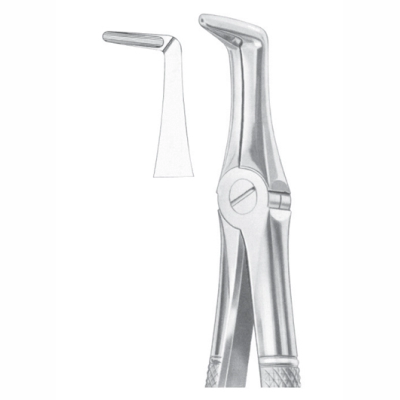
Extracting forceps are dental instruments used to grasp and remove teeth from their sockets in the alveolar bone, after loosening via elevators, or directly as part of an extraction procedure. They are among the core tools in exodontia. TBS Dental+2SurgiMac Dental Supply+2
Configuration & Design Features
-
Beaks / Jaws: These are the active part that grasps the tooth. They are shaped to adapt to the tooth crown or root anatomy: concave inner surfaces to conform to convex tooth surfaces; may include grooves or serrations to improve grip and reduce slippage. Dentaltix+1
-
Shank / Neck: The intermediate section between the beaks and handles. Its angle determines whether the forceps are for upper or lower teeth. For example, upper molar/buccal forceps often have angled necks to navigate the cheek and maxillary anatomy; lower premolar or anterior forceps may be more straight. Dentaltix+1
-
Handles: Ergonomic design is important: handles should allow a good grip, non‐slip surface, and enough leverage while minimizing fatigue. Some designs include finger rings or textured surfaces.
-
Hinge or Joint: The pivot point must be strong, precise, and durable. A smooth hinge ensures predictable movement and consistent grip.
-
Material: Typically high-grade surgical stainless steel, often forged, hardened, and polished. Resistant to corrosion, wear, and repeated sterilization cycles.
Types & Specializations
-
There are forceps specialized for different teeth: incisors, canines, premolars, molars. Also left/right versions for upper molars, etc. SurgiMac Dental Supply+1
-
Forceps for root remnants or impacted roots have fine beaks, sharper tips, or different angulations to reach under gum or bone. Dentaltix+1
Key Advantages
-
Strong, secure grip leading to effective tooth removal with minimal trauma.
-
Leveraging design (angle, beak fit) protects adjacent tissue and structures.
-
Durable; designed for repeated use if maintained.
-
Helps reduce procedure time, patient discomfort.
Considerations & Best Practices
suture Instruments Ligature Needles AE 02 3921
Follow Us On Social Media Account
Reviews
There are no reviews yet.